
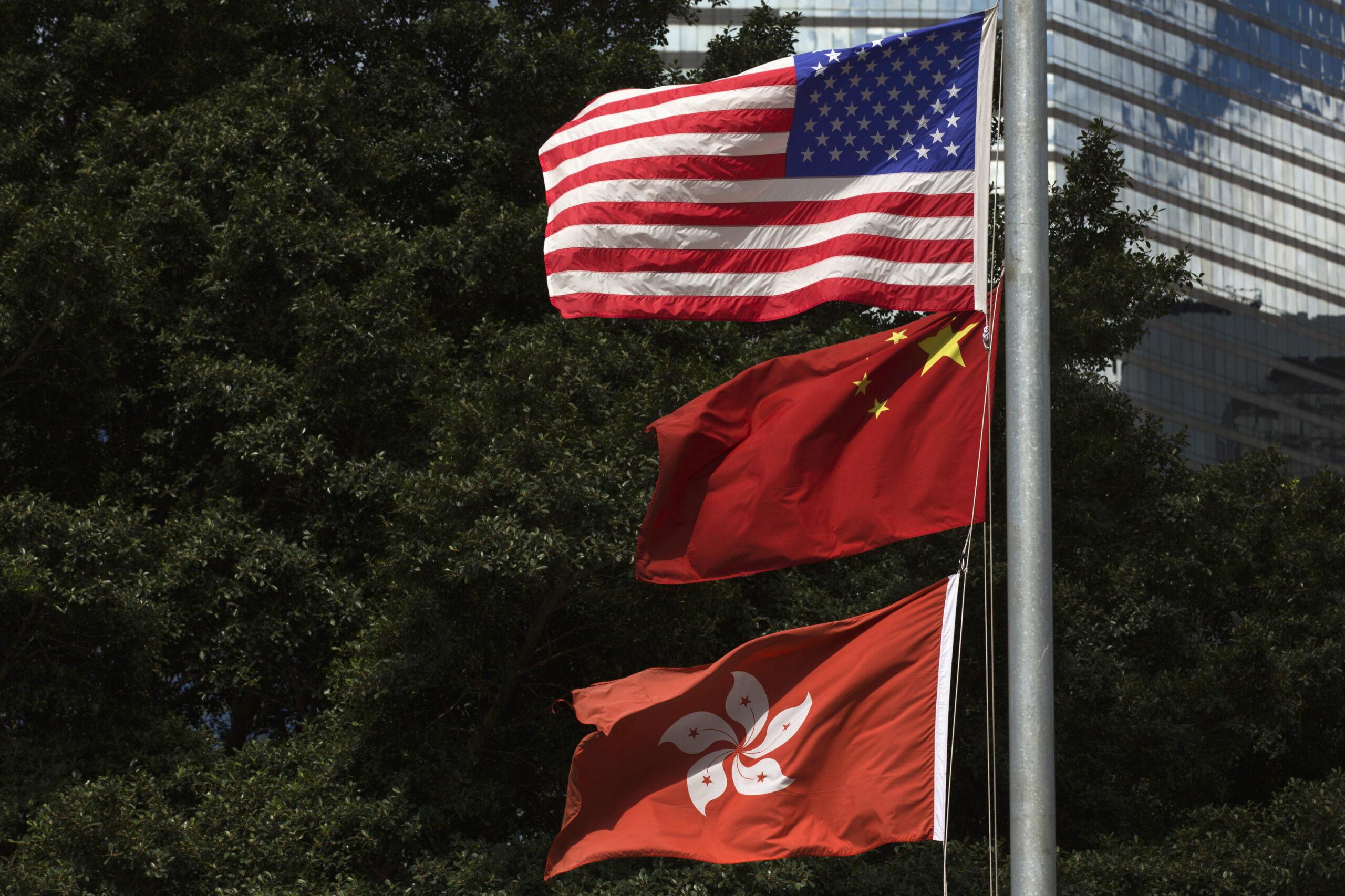
Hong Kong is among the world’s top three financial centers. It has maintained favorable economic relationships with both the United States (“U.S.”) and the People’s Republic of China (“PRC”) for decades, serving as an “economic Switzerland” of sorts between the two superpowers. Given the recent tension between the U.S., the PRC, and Hong Kong, this article explores whether Hong Kong remains a bridge for PRC and U.S. companies to do business. We also assess the advantages of secondary listings on the Hong Kong Stock Exchange (“HKSE”) and provide guidance to navigate regulatory risks across the U.S.-PRC-Hong Kong nexus.
Since the Maritime Silk Road in the second century BCE, Hong Kong has been the world’s springboard into what is now the PRC. Today, Hong Kong also facilitates the PRC’s global access; in 2022, $1.6 trillion of the PRC’s $2.7 trillion in outward direct investment was channeled through Hong Kong. 5
The relationship between Hong Kong and the PRC is likely to become even more important as the PRC invigorates growth by shifting from an export-oriented economy to a “dual circulation” model. 6 This model includes the PRC’s Belt and Road Initiative, a global infrastructure and economic development strategy that facilitates trade between 150 countries around the world. 7 Hong Kong’s part in the dual circulation model includes:
- Renminbi (“RMB”) Hub: Hong Kong is the world’s largest offshore RMB hub, processing over 70 percent of the world’s offshore RMB payments. 8
- Dispute Resolution: As a leader in Asia-Pacific dispute resolution, Hong Kong plays a significant role in resolving disputes related to the Belt and Road Initiative. 9
- Stock Connect: The Stock Connect Program facilitates cross-border stock trading between Hong Kong and the PRC. Through it, the world can directly access PRC stock markets from Hong Kong, and PRC investors can invest directly in Hong Kong–listed companies. 10 Stock Connect has opened trading for more than 3,300 stocks, representing nearly 90 percent of the total market capitalization across the Shanghai-Shenzhen-Hong Kong markets. 11
HKSE secondary listings (defined below) also provide critical support for the dual circulation model, enhancing PRC firms’ global profiles, brand recognition, and valuations. Secondary listings also help companies navigate complex regulatory environments in different markets. 12
Hong Kong became a preeminent global financial hub between 1983 and 1997. 13 The advantages of doing business “through” Hong Kong for U.S. businesses are numerous and include the following:
- Internationally Aligned Financial and Regulatory Systems: Hong Kong’s legal and financial systems, based on British common law principles, are distinct from the PRC’s. In alignment with the needs of the international business community, they provide contract and intellectual property protection, as well as transparent taxation.
- Geographic and Cultural Advantages: As Hong Kong borders the PRC, professionals in Hong Kong speak English, Cantonese, and Mandarin, facilitating cultural alignment. Located at the center of the Greater Bay Area—an area that includes Macao and nine key cities in the PRC’s Guangdong Province, with a population exceeding 87 million and a GDP of more than US$1.9 trillion 14 —Hong Kong is positioned within a regional economy whose industrial prowess rivals that of San Francisco and Tokyo.
- Logistical Integration: Hong Kong ports, logistical infrastructure, and talent, coupled with its free and open markets, connect countries around the world, including for the Belt and Road Initiative. 15
Hong Kong invites “secondary listings” where companies already publicly traded on one stock exchange can also list on the HKSE. Hong Kong has the highest stock-market-capitalization-to-GDP ratio or “Buffett Indicator” in the world at approximately 1406.42 percent as of September 3, 2025—almost seven times that of the U.S. 16 This means the HKSE provides tremendous international financial exposure. Companies are increasingly pursuing secondary listings in Hong Kong to access new capital pools and protect themselves from geopolitical and regulatory volatility.
The HKSE’s stringent listing rules mean that having a secondary listing in Hong Kong bolsters companies’ (including PRC companies’) reputation for the following:
- Credibility: Investors can trust HKSE-listed companies to maintain high governance standards and not use secondary listings to evade regulatory oversight. 17 HKSE explicitly rejects applicants who attempt to circumvent primary listing rules, thereby maintaining market integrity. 18
- Compliance and Capitalization: Only well-established companies with a minimum of two to five years of regulatory compliance on a qualifying stock exchange 19 and market capitalization of HK$3 billion to HK$40 billion may be listed. 20
Despite the PRC’s status as the U.S.’s third-largest trading partner, 21 with approximately 5,000 PRC companies operating in the U.S. as of the end of 2022 22 and more than 280 PRC companies listed on U.S. stock exchanges, 23 recent tension between the two countries has led regulators to erect barriers on both sides.
PRC regulations that may be thorny for U.S. businesses include the following:
- Unreliable Entity List: The 2020 Unreliable Entity List allows the PRC to restrict PRC company interactions with foreign entities deemed threats to national sovereignty, security, and development. Restrictions include fines, entry restrictions, prohibitions on import/export, and investing restrictions. 24 To date, the PRC has only added U.S. firms to the Unreliable Entity List. 25
- Extraterritorial Export Controls: The PRC has traditionally restricted the export of “dual use” items (i.e., items that can be used for both civilian and military purposes), 26 but since December 2024, it has applied those restrictions extraterritorially. 27 This creates additional compliance burdens and supply chain risks.
- Rules on Counteracting Unjustified Extraterritorial Application of Foreign Legislation and Other Measures: In 2021, the PRC enacted this rule to protect PRC entities from foreign laws that infringe on PRC sovereignty or economic interests. For example, if a U.S. rule prohibited a PRC firm from doing business with Iran, this rule would, among other things, give the PRC firm standing to sue the U.S. actor in Chinese court. 28
- Anti-Foreign Sanctions Law: This law authorizes the PRC to restrict visas, freeze assets, and restrict business activities in the PRC for foreigners that break PRC rules. 29 For example, in February 2022, the Chinese government used the Anti-Foreign Sanctions Law to sanction Lockheed Martin and Raytheon Technologies for arms sales to Taiwan. 30
The U.S.’s regulatory barriers are similarly daunting for doing business with companies in the PRC. The U.S. Office of Foreign Assets Control prohibits U.S. companies from trading PRC securities in the defense and surveillance industries. 31 It further restricts U.S. persons from engaging in transactions with PRC persons or entities on the Specially Designated Nationals and Blocked Persons List. 32 The U.S. Department of Commerce also maintains a similar list called the Commerce Control List, which restricts PRC transactions involving nuclear materials, semiconductors, and telecommunications software. 33
As for U.S. tariffs, in 2018, the Office of the U.S. Trade Representative issued tariffs on certain PRC imports under Section 301 of the Trade Act of 1974 (“Section 301 Tariffs”), which have since been expanded multiple times. 34 Beginning in February 2025, in addition to existing tariffs (including Section 301 Tariffs), the U.S. also imposed tariffs on imports of most PRC goods pursuant to the International Emergency Economic Powers Act (“IEEPA Tariffs”), which gradually increased through March and April 2025, reaching 145 percent by April 10, 2025. 35 Subsequently, in May 2025, the U.S. and China agreed to temporarily reduce certain tariffs for ninety days, until August 12, 2025, to reach a formal trade agreement. 36 The temporary reduction has since been extended for another ninety days, until November 10, 2025. 37
Readers should note that tariff rates and circumstances may have changed since the time of writing. Further, as of the time of writing, the legal status of IEEPA Tariffs remains unsettled.
Given the U.S.-PRC tension discussed above, it makes sense that U.S. regulators would view Hong Kong and the PRC differently and that secondary listings in Hong Kong would differentiate PRC firms. However, Hong Kong’s robust relationship with the U.S. began to change after the PRC issued the National Security Law, which covers certain acts that endanger national security, including secession, subversion, terrorism and collusion with foreign forces. 38 In response, the U.S. issued Executive Order 13936, suspending Hong Kong’s special status under the U.S.-Hong Kong Policy Act (i.e., beginning “Hong Kong normalization”); 39 modified export controls and licensing requirements on dual-use technologies, semiconductors, and technologies related to artificial intelligence from Hong Kong; 40 and required all imported goods produced in Hong Kong to show “China” as their country of origin. 41 The IEEPA Tariffs equally apply to Hong Kong, although Hong Kong–origin products are not subject to Section 301 Tariffs. 42
So, although Hong Kong is still a critical business intermediary for the U.S. and the PRC, the complex relationships between the three entities require that U.S. and PRC companies take precautions when considering business together—even for Hong Kong–listed firms.
Accordingly, here are nine steps U.S. and PRC companies should consider taking when doing business together:
- Perform due diligence on the counterparty’s beneficial owners to ensure compliance with the Unreliable Entity List (PRC) and the Specially Designated Nationals and Blocked Persons List (U.S.).
- Determine whether related products or services are on either country’s restricted lists.
- Determine the transaction’s reliance on exports and whether those exports are subject to extraterritorial controls.
- Consider the costs of tariffs and determine alternative methods, components, and materials to reduce costs.
- Perform a detailed risk assessment on geopolitical and supply chain risks for each product or service, in consultation with appropriate advisors. Analyze relevant data, including the product’s country of origin, classification, and valuation, as well as insights from supply chain mapping.
- Regularly review and update contracts to manage and allocate geopolitical risks and costs. For example, consider including events such as embargoes, tariffs, and import/export restrictions in force majeure provisions.
- Continuously monitor and assess changes in global trade developments, including tariffs and export controls, to facilitate timely compliance and strategic alignment.
- Proactively engage in transparent communications and strategic discussions with stakeholders (including employees, suppliers, and customers), which is essential to successfully navigate the evolving complexity between Hong Kong, the PRC, and the U.S.
- Work with strategic partners knowledgeable about how to navigate relationships across the three borders.
- Hong Kong Trade Summary, Off. of the U.S. Trade Representative (last visited Mar. 5, 2025).
- Hong Kong – International Trade and Investment Country Facts, U.S. Dep’t of Commerce, Bureau of Economic Analysis (last visited Mar. 5, 2025).
- 2024 Investment Climate Statements: Hong Kong, U.S. Dep’t of State (2024).
- 2024 Hong Kong Policy Act Report, U.S. Dep’t of State (Mar. 29, 2024).
- Oliver Rui, How Can Chinese Companies Expand Their Overseas Footprint, CEIBS (May 23, 2024).
- “Promoting Dual Circulation,” in The 14th Five-Year Plan for Economic and Social Development and Long-Range Objectives Through the Year 2035, PRC Nat’l Dev. & Reform Comm’n (Jul. 6, 2022).
- The Belt and Road Initiative: A Key Pillar of the Global Community of Shared Future, PRC St. Council Info. Off. (Oct. 2023).
- Dominant Gateway to China, H.K. Monetary Auth. (last visited Mar. 5, 2025); Hong Kong: The Global Offshore Renminbi Business Hub, H.K. Monetary Auth. (Jan. 2016).
- Policy Address: Centre for International Legal and Dispute Resolution Services in the Asia-Pacific Region, H.K. Gov’t (Oct. 2021); Policy Areas: International Legal and Dispute Resolution Services, H.K. Const. & Mainland Affs. Bureau, Guangdong-Hong Kong-Macao Greater Bay Area Dev. Off. (last visited Mar 5, 2025).
- Luo Weiteng, HKEX CEO: Stock Connect Scheme a ‘Secret Weapon’ for HK Market, China Daily H.K. Edition (Sept. 12, 2024).
- Li Xiaoyun, Stock Connect Injects $690b into Mainland, HK Markets over 10 Years, China Daily H.K. Edition (Nov. 12, 2024).
- See, e.g., NIO Inc., Notice of Listing by Way of Introduction on the Main Board of the Stock Exchange of Hong Kong Limited (Feb. 28, 2022).
- This was due to rapid, post–World War II economic growth; the Hong Kong dollar being pegged to the U.S. dollar in 1983; and the “One Country, Two Systems” principle established in 1997.
- Outline Development Plan for the Guangdong-Hong Kong-Macao Greater Bay Area (Courtesy Translation), St. Council of PRC (2019); Overview, H.K. Const. & Mainland Affs. Bureau, Guangdong-Hong Kong-Macao Greater Bay Area Dev. Off. (last visited Mar 5, 2025).
- The Belt and Road Initiative, H.K. Com. & Econ. Dev. Bureau, Belt & Road Off. (Jan. 4, 2023).
- Buffett Indicator: Hong Kong Stock Market Valuations and Forecasts, GuruFocus (last visited Sep. 03, 2025); Buffett Indicator: Where Are We With Market Valuations?, GuruFocus (last visited Sep. 03, 2025).
- Rules Governing the Listing of Securities on The Stock Exchange of Hong Kong Ltd., H.K. Exchanges & Clearing Ltd., r. 19C.02A(1)(a)–(b) (2023).
- Id., r. 19C.02A(1)(d).
- Id., rr. 19C.04, 19C.05A(1), 19C.05A(3).
- Id., rr. 19C.05(2), 19C.05A(2), 19C.05A(4).
- Top Trading Partners, U.S. Census Bureau (last visited Aug. 26, 2025).
- Giulia Interesse, China Corporate Presence and Investment in the US, China Briefing (Dec. 22, 2023).
- Chinese Companies Listed on Major U.S. Stock Exchanges, U.S.-China Econ. & Sec. Rev. Comm’n (Mar. 7, 2025).
- China Adds Two US Firms to Unreliable Entity List to Safeguard National Security: MOFCOM, Global Times (Feb. 4, 2025).
- Laney Zhang, China: Government Releases Provisions on Unreliable Entity List Regime, Global Legal Monitor, Law Libr. of Cong. (Oct. 9, 2020).
- Giulia Interesse, China Issues New Export Control Regulations: What Businesses Need to Know?, China Briefing (Nov. 19, 2024).
- China Sets Precedent by Banning Others From Selling Goods to US, Bloomberg News (Dec. 6, 2024).
- China Issues Rules to Counteract “Unjustified” Extraterritorial Application of Foreign Measures, Covington & Burling LLP (Jan. 12, 2021).
- Bashar Malkawi, Here’s How China Is Responding to US Sanctions – With Blocking Laws and Other Countermeasures, The Conversation (July 21, 2023).
- Beijing Sanctions Lockheed, Raytheon Again over Taiwan Arms Sales, Reuters (Feb. 21, 2022).
- Exec. Order No. 14032, 86 Fed. Reg. 30145 (June 3, 2021).
- Specially Designated Nationals (SDNs) and the SDN List, U.S. Dep’t of the Treasury, Off. of Foreign Assets Control (last visited Mar. 5, 2025).
- 15 C.F.R. pt. 774, supp. no. 1 (2025).
- See, e.g., Notice of Modification: China’s Acts, Policies and Practices Related to Technology Transfer, Intellectual Property and Innovation, 89 Fed. Reg. 76581 (Sept. 18, 2024); Notice of Modification: China’s Acts, Policies, and Practices Related to Technology Transfer, Intellectual Property, and Innovation, 89 Fed. Reg. 101682 (Dec. 16, 2024).
- Presidential Tariff Actions, Off. of the U.S. Trade Representative (last visited Apr. 23, 2025).
- Statement, Gov’t of the U.S. & Gov’t of the PRC, Joint Statement on U.S.-China Economic and Trade Meeting in Geneva (May 12, 2025); Exec. Order No. 14298, 90 Fed. Reg. 21831 (May 12, 2025).
- Exec. Order No. 14334, 90 Fed. Reg. 39305 (Aug. 11, 2025).
- Annex III – National Laws to be Applied in the Hong Kong Special Administrative Region, The Basic Law of the Hong Kong Special Administrative Region of the People’s Republic of China.
- Exec. Order No. 13936, 85 Fed. Reg. 43413 (Jul. 17, 2020).
- Removal of Hong Kong as a Separate Destination Under the Export Administration Regulations, 85 Fed. Reg. 83765 (Dec. 23, 2020); Revision to the Export Administration Regulations: Suspension of License Exceptions for Hong Kong, 85 Fed. Reg. 45998 (Jul. 31, 2020).
- Country of Origin Marking of Products of Hong Kong, 85 Fed. Reg. 48551 (Aug. 11, 2020).
- Section 301 Trade Remedies Frequently Asked Questions, U.S. Customs & Border Protection (last modified Apr. 14, 2025).